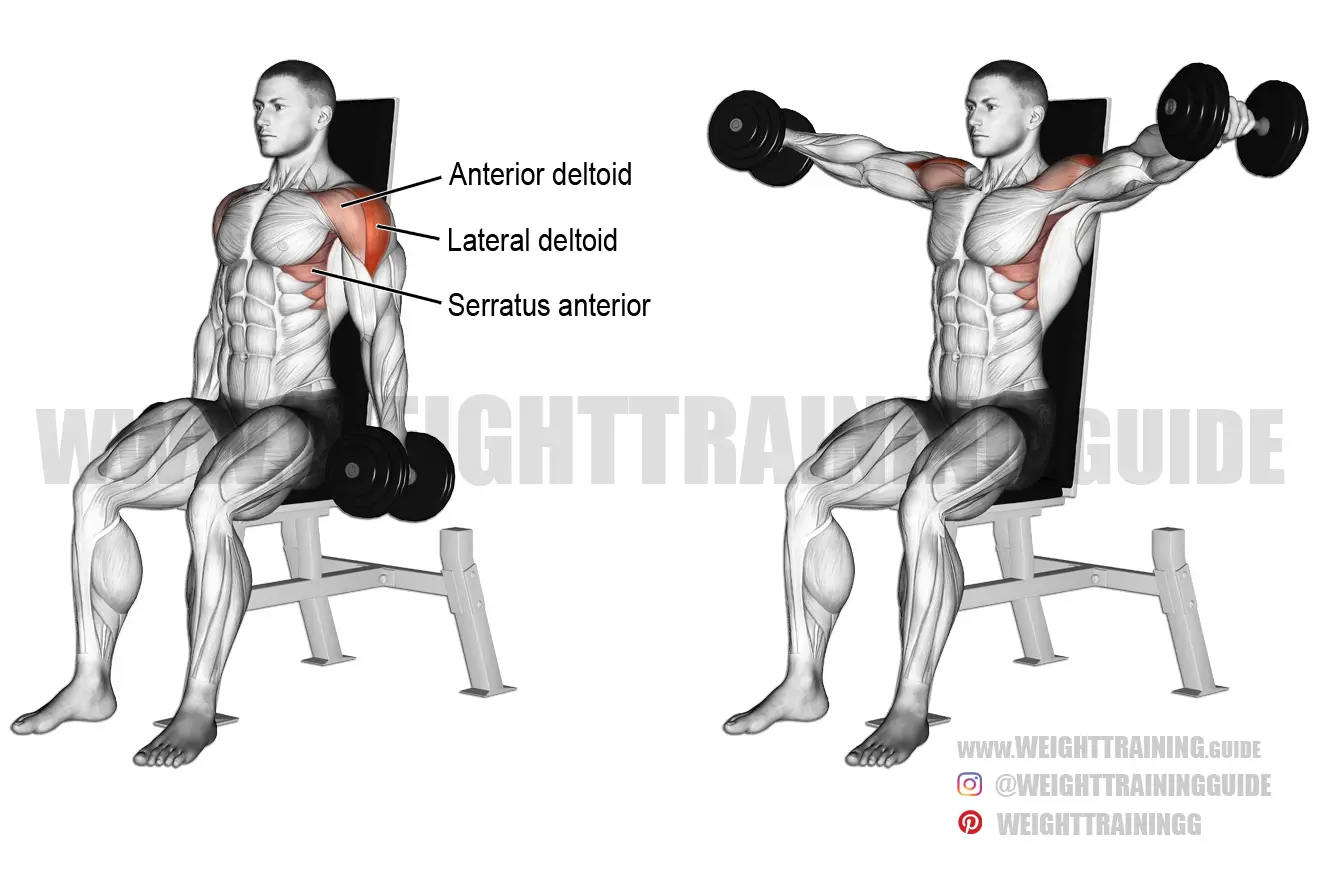
How to Master the Seated Lateral Raise: the Complete Dumbbell Guide to 3D Delts
Lifting with sloppy form wastes energy and exposes fragile shoulder structures to injury. Correct these common mistakes to keep the stimulus where it belongs:
WRONG: "Pouring the Pitcher"
Dumbbell tilted: Pinky high, thumb down
Result: Internal rotation -> Subacromial Impingement
CORRECT: Neutral / Slight External Clearance
Dumbbell level or thumb tilted slightly up (approx. 5°)
Result: Natural clearance in the scapular plane
- Excessive Trapezius Shrugging: When a set gets tough, lifters naturally hike their shoulder blades toward their ears. This action shifts mechanical tension directly onto the upper trapezius. Depress your shoulder girdle before starting the set. Imagine keeping your shoulder blades pushed down into your back pockets, maintaining a long neck throughout the entire range of motion.
- Leading with the Hands Instead of the Elbows: If your wrists climb higher than your elbows during the movement, your forearms and anterior deltoids take over the workload. Think about leading with your elbows, keeping your wrists neutral and slightly lower than the elbow joints at the top of the raise.
- Internal Rotation at Peak Contraction: Forcing the pinky finger higher than the thumb at the top of the rep drastically narrows the subacromial space. Keep your hands neutral or let your thumbs point upward by roughly 5 degrees. This slight external rotation allows the humeral head to glide safely beneath the acromion.
- Bouncing the Weights off the Bench: Allowing the dumbbells to bang into the metal bench frame or bounce off your thighs generates artificial momentum. Stop the weights roughly 4 to 6 inches outside your hips to maintain continuous baseline tension on the lateral deltoid fibers.
Tags: