
The Photograph That Sparked a Movement: the Archival Record of Emmett Till
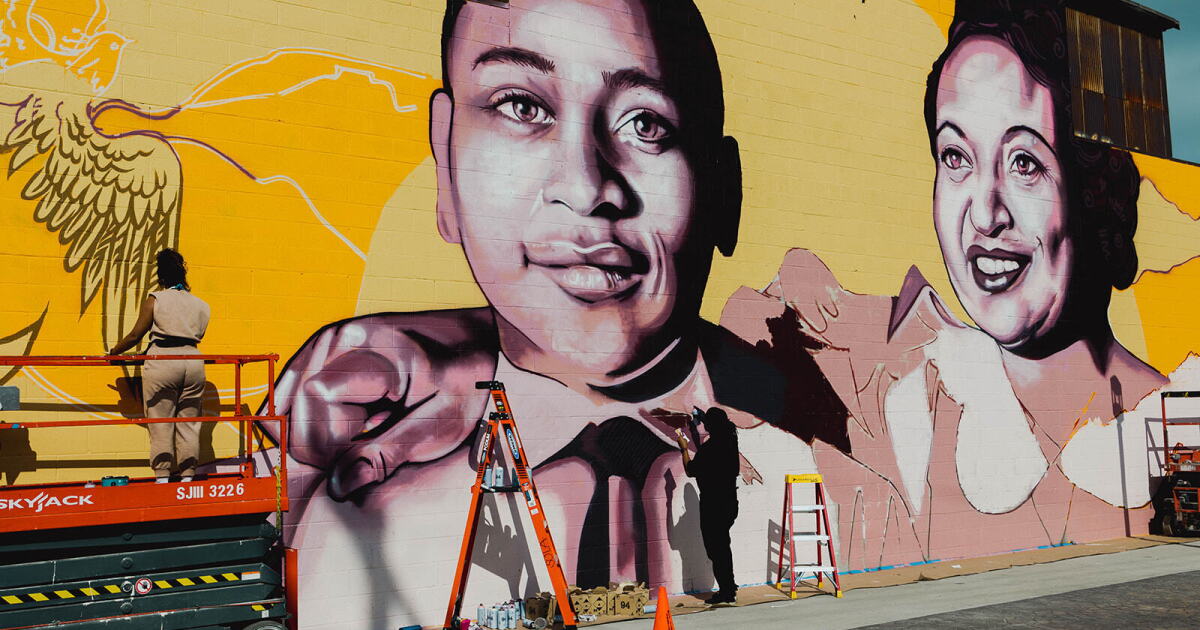
The visual confrontation initiated by Till-Mobley did not fade with the close of the civil rights era. Instead, it formed a visual grammar that contemporary visual artists, writers, and documentary photographers draw on to interrogate state violence today.
Photographers like Baltimore-based Devin Allen have cited their initial encounter with Till's casket photo as an intellectual turning point, framing their documentation of modern police protests through the lens of Till-Mobley's radical public transparency. Visual artists from Jean-Michel Basquiat to Dana Schutz and Glenn Ligon have revisited the tension between bearing witness and visual exploitation. Till's face remains an active locus of inquiry: How should a society document anti-Black violence without turning human suffering into passive spectacle?
The physical artifact itself entered the national historical canon in 2009, when Emmett Till's original glass-topped casket was discovered discarded in a dilapidated shed at Burr Oak Cemetery in Alsip, Illinois, following an unrelated grave-reselling scandal. The Till family donated the casket to the Smithsonian's National Museum of African American History and Culture. Today, it rests in a dedicated memorial space within the museum, preserved in quiet darkness where visitors are prohibited from taking photographs, returning the artifact to a place of somber reverence rather than mass reproduction.


